Author: mizansphuron

Session on ‘Application Modernization using Cloud Native Approach’

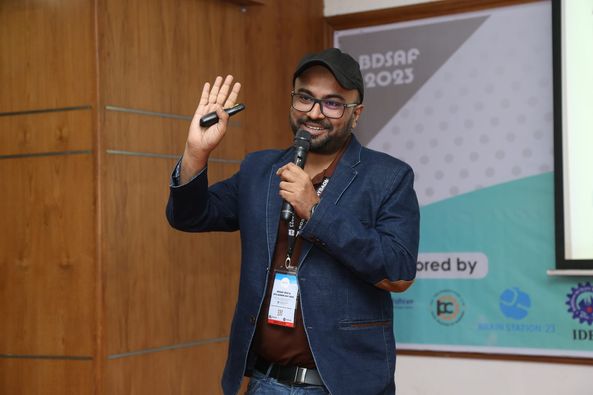
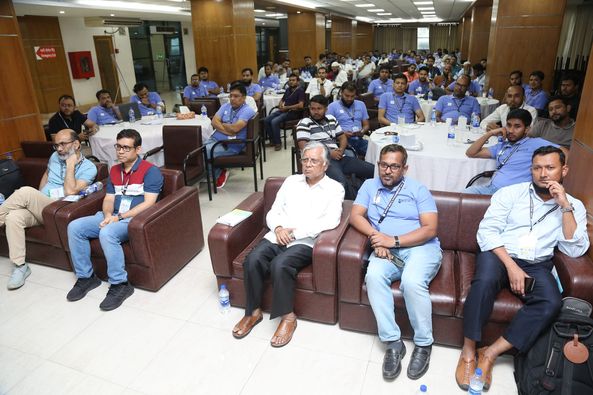
On July 28, 2023, the Bangladesh System Admin Forum (BDSAF) hosted a remarkable event to celebrate System Admin Day 2023. As an esteemed speaker at the event, I had the opportunity to shed light on ‘Application Modernization using Cloud Native Approach,’ with a special focus on how Amazon Web Services (AWS) can play a pivotal role in the process. The event was a resounding success, bringing together passionate professionals from across the country to discuss the latest trends in cloud computing and its impact on application modernization.

System Admin Day 2023: A Gathering of Tech Enthusiasts

The annual System Admin Day is an occasion when IT professionals, system administrators, and cloud enthusiasts unite to celebrate their indispensable contributions to the smooth functioning of organizations. This year’s event, organized by BDSAF, was no exception, drawing a large crowd eager to expand their knowledge and network with like-minded individuals.

The day’s agenda was packed with insightful talks, workshops, and interactive sessions covering various topics related to cloud computing, cybersecurity, automation, and more. Distinguished speakers from both local and international tech industries shared their expertise, making the event an unforgettable experience for everyone involved.
Application Modernization: The Key to Keeping Pace with Technology

In my session, ‘Application Modernization using Cloud Native Approach,’ I emphasized the significance of keeping applications up-to-date and agile in today’s rapidly evolving technological landscape. As businesses strive to maintain a competitive edge, they must embrace modernization to stay relevant and efficient.

During the talk, we explored the challenges that organizations often face when transitioning from traditional monolithic applications to cloud-native solutions. The discussion revolved around the benefits of adopting a cloud-native approach, such as scalability, resilience, and cost optimization.

AWS: Empowering Application Modernization

Among the cloud service providers, AWS stands out as a leader, offering a wide array of tools and services designed to support the modernization process effectively. I discussed how AWS enables businesses to re-architect their applications using microservices, containers, and serverless computing, leading to enhanced flexibility and reduced infrastructure overhead.

Moreover, AWS’s extensive portfolio of managed services, including Amazon RDS, Amazon DynamoDB, and Amazon ECS, allows organizations to offload operational tasks and focus on developing innovative features for their applications.

Real-World Examples

To bring my points to life, I shared real-world examples of companies that successfully modernized their applications using AWS. These case studies highlighted how cloud-native architectures empowered businesses to scale effortlessly, improve performance, and achieve cost savings while catering to a growing user base.
Conclusion

System Admin Day 2023 organized by BDSAF was an incredible gathering of tech enthusiasts, and I was honored to contribute as a speaker on the topic of ‘Application Modernization using Cloud Native Approach’ with a focus on AWS. As the IT landscape continues to evolve, staying at the forefront of technology is crucial for organizations to succeed in an ever-competitive world.

Adopting a cloud-native approach supported by AWS provides businesses with the tools and scalability needed to thrive. As we move forward, it is essential for professionals to continuously educate themselves, embrace innovation, and collaborate with industry peers to drive meaningful change in the tech world.

I have attached the presentation deck below as well:

Transforming HR in IT Service Companies with AWS Generative AI Services

The field of Human Resources (HR) plays a vital role in any organization, including IT service companies. From talent acquisition and onboarding to employee engagement and performance management, HR professionals are responsible for ensuring the success and well-being of the workforce. However, the complex nature of HR tasks in the fast-paced IT industry often poses challenges. Fortunately, AWS Generative AI Services offer innovative solutions that can revolutionize HR practices and address these unique challenges. In this blog post, we will explore how AWS Generative AI Services can transform HR in IT service companies, enabling them to overcome common problems and streamline their operations.

Enhancing Talent Acquisition:
Talent acquisition is a critical aspect of HR, and the success of IT service companies largely depends on attracting and retaining top-tier talent. AWS Generative AI Services, such as Amazon Rekognition, can revolutionize the recruitment process by automatically analyzing resumes, identifying key skills and qualifications, and even assessing facial expressions during interviews to gauge candidate suitability. This significantly reduces manual effort, speeds up the hiring process, and improves the overall quality of talent acquisition.

Enabling Personalized Employee Training:
In the rapidly evolving IT industry, continuous learning and development are crucial for employees to stay ahead. AWS Generative AI Services, such as Amazon SageMaker, can analyze individual employee performance, identify skill gaps, and generate personalized training programs. By leveraging machine learning algorithms, HR teams can provide targeted learning resources and recommendations, tailored to each employee’s needs. This not only enhances the skills of the workforce but also boosts employee engagement and job satisfaction.

Improving Employee Satisfaction and Retention:
Employee satisfaction and retention are key challenges for HR in IT service companies. AWS Generative AI Services, like Amazon Comprehend, can analyze employee feedback from various sources such as surveys, emails, and chat logs. By understanding sentiment and identifying recurring issues, HR professionals can proactively address concerns, implement appropriate interventions, and create a more positive work environment. The ability to leverage AI-driven insights helps improve employee satisfaction, reduces turnover, and increases overall organizational productivity.

Streamlining Performance Management:
Traditional performance management processes can be time-consuming and subjective. AWS Generative AI Services, such as Amazon Forecast, can analyze historical data and predict future employee performance based on various factors like project outcomes, feedback, and individual capabilities. This enables HR teams to make data-driven decisions when evaluating performance, identifying high performers, and allocating appropriate rewards and recognition. By introducing transparency and objectivity into performance management, these AI services can foster a culture of fairness and encourage continuous improvement.

Enhancing Employee Well-being:
Employee well-being is a growing concern in the IT industry, and HR professionals are tasked with ensuring a healthy work-life balance. AWS Generative AI Services, such as Amazon Transcribe and Amazon Comprehend Medical, can analyze voice recordings or chat interactions to detect signs of stress, burnout, or mental health issues. This allows HR teams to intervene early, provide support, and promote employee well-being. The integration of AI services into HR processes enables a proactive approach to employee wellness and helps create a supportive work environment.

import boto3

# Initialize AWS clients for the required services
rekognition_client = boto3.client('rekognition')
sagemaker_client = boto3.client('sagemaker')
comprehend_client = boto3.client('comprehend')
forecast_client = boto3.client('forecast')
transcribe_client = boto3.client('transcribe')
comprehend_medical_client = boto3.client('comprehendmedical')

# Talent acquisition: Analyzing resumes using Amazon Rekognition
def analyze_resume(resume):
    response = rekognition_client.detect_text(Image={'Bytes': resume})
    extracted_text = [text['DetectedText'] for text in response['TextDetections']]
    # Process the extracted text and extract key skills and qualifications
    # Perform further analysis or actions based on the extracted information

# Personalized employee training: Generating training programs using Amazon SageMaker
def generate_training_program(employee_id):
    # Retrieve employee performance data from a database or other source
    performance_data = retrieve_performance_data(employee_id)
    # Use performance data to generate a personalized training program using SageMaker
    training_program = sagemaker_client.invoke_endpoint(EndpointName='training-endpoint', Body=performance_data)
    # Process and return the generated training program

# Employee satisfaction and retention: Analyzing employee feedback using Amazon Comprehend
def analyze_employee_feedback(feedback):
    response = comprehend_client.detect_sentiment(Text=feedback, LanguageCode='en')
    sentiment = response['Sentiment']
    # Process sentiment analysis results and take appropriate actions based on employee feedback

# Performance management: Predicting employee performance using Amazon Forecast
def predict_employee_performance(employee_id):
    # Retrieve historical performance data for the employee
    historical_data = retrieve_historical_data(employee_id)
    # Use Amazon Forecast to train a predictive model and generate performance predictions
    forecast_model = forecast_client.create_predictor(PredictorName='performance-predictor', Data=historical_data)
    predictions = forecast_client.query_forecast(ForecastArn=forecast_model['PredictorArn'])
    # Process and return the performance predictions

# Employee well-being: Analyzing voice recordings using Amazon Transcribe and Amazon Comprehend Medical
def analyze_voice_recording(voice_recording):
    transcription_job = transcribe_client.start_transcription_job(
        TranscriptionJobName='voice-transcription', Media={'MediaFileUri': voice_recording}, LanguageCode='en-US'
    )
    job_status = transcribe_client.get_transcription_job(TranscriptionJobName=transcription_job['TranscriptionJobName'])
    if job_status['TranscriptionJob']['TranscriptionJobStatus'] == 'COMPLETED':
        transcript_uri = job_status['TranscriptionJob']['Transcript']['TranscriptFileUri']
        # Retrieve the transcript and analyze it using Comprehend or Comprehend Medical
        analysis_result = comprehend_medical_client.detect_entities(Text=transcript)
        # Process the analysis result and take appropriate actions based on detected entities

# Example usage
resume_bytes = b'...'  # Resume file content as bytes
analyze_resume(resume_bytes)

employee_id = '123'  # Example employee ID
training_program = generate_training_program(employee_id)

feedback_text = '...'  # Employee feedback text
analyze_employee_feedback(feedback_text)

predicted_performance = predict_employee_performance(employee_id)

voice_recording_uri = '...'  # Voice recording file URI
analyze_voice_recording(voice_recording_uri)

The above code snippet showcases various functionalities using AWS Generative AI services. Here’s a breakdown of what each function does:

  1. analyze_resume(resume): This function takes a resume file (in bytes format) as input and uses Amazon Rekognition to analyze the text content within the resume. It detects text within the resume image and performs further processing to extract key skills and qualifications from the text.
  2. generate_training_program(employee_id): This function generates a personalized training program for an employee based on their performance data. It retrieves the employee’s performance data from a database or another source, then uses Amazon SageMaker to create a personalized training program tailored to the employee’s needs.
  3. analyze_employee_feedback(feedback): This function analyzes employee feedback text using Amazon Comprehend. It detects the sentiment (positive, negative, neutral) of the feedback, providing insights into the overall employee satisfaction. Based on the sentiment analysis results, further actions can be taken to address specific concerns or improve the work environment.
  4. predict_employee_performance(employee_id): This function predicts an employee’s future performance using historical performance data. It retrieves historical data for the employee, then uses Amazon Forecast to train a predictive model. The model generates performance predictions that can be used for evaluating and managing employee performance.
  5. analyze_voice_recording(voice_recording): This function analyzes a voice recording using a combination of Amazon Transcribe and Amazon Comprehend Medical. It starts a transcription job with Amazon Transcribe to convert the voice recording into text. The resulting transcript is then analyzed using Amazon Comprehend Medical to detect entities related to health, such as medical conditions, medications, or symptoms. This analysis can be useful for monitoring employee well-being and identifying potential health issues.

Cloud Journey with AWS (Online Batch-9)

I am the official trainer of AWS Cloud in one of the top training institute. BITM is the training wing of Bangladesh software Association (BASIS) (https://basis.org.bd/). I have trained a total of 12 batches (3 offline and 9 online) as requested by the Bangladesh Software Association. Every Saturday-Monday-Wednesday from 7:30 PM to 10:00 PM is scheduled for the class to make sure people can join right after their office hours and current batch completed is Online Batch 9 titled “Cloud Journey With AWS” where 19 candidates participated in the class.

https://bitm.org.bd/course-details/1048/online-course-on-cloud-journey-with-aws-beginner-to-advance-level?fbclid=IwAR02jN2hjcxHE4jC6mNy7eEk5I_e8PoJn3lqfqS5-ykvGhwUjWD4cfqZCrA

I have shared the course outline below:

Class 01:
Introduction to Amazon Web Services (AWS)
About AWS
Elastic computing
Advantage of cloud computing
Types of Cloud Computing
Introduction to the AWS products
AWS Security Compliance
Regions and Availability Zones
Signing up for AWS
AWS Free usage tier
Introduction AWS management console


Class 02 & Class 03:

EC2 Instances & ELB (Elastic Load Balancer)
Understanding AMI
Launching your first AWS instance
Hands-on Exercise on EC2
On-demand Instance pricing
Reserved Instance pricing
Spot instance pricing
Settings up security groups
Amazon Machine Images (AMI)
IP Addressing Scheme
Public and Private IP’s
Key Pairs
Elastic IP’s

ELB (Elastic Load Balancer)
Introduction to ELB
Basic ELB concepts
Internet-facing ELB
VPC-facing ELB
Create an ELB (Elastic Load Balancer)
Adding and removing instances on ELB

EBS (Elastic Block Storage)
Create EBS volumes
Delete EBS Volumes
Attach and detach EBS volumes
Mounting and un-mounting EBS volume
Creating and deleting snapshots
Creating volumes from snapshots

Auto scaling
Horizontal vs. vertical scaling
Boot strapping
Create a launch configuration
Create an Auto Scaling group
Create a policy for your Auto Scaling group
Setting up an auto-scaled, load-balanced Amazon EC2 application

Class 04:
Relational Database Service (RDS)
Selecting the Database type
Configuring the database
Hands-on Exercise on EC2
Creating database Configuring backups
Configuring the maintenance windows
Connecting to the database

Amazon Virtual Private Cloud (VPC)
What is VPC?
VPC configuration
VPC security
Elastic IP’s
Inbound and outbound ACL’s

AWS Cloud Trail
What is CloudTrail
How it works


Class 05:
Route53
Creating zones
Hosting a website Understanding routing policies
Weighted simple and failover policies

S3 (Simple Storage Service)
What is S3?
RRS (Reduced Redundancy storage)
S3 durability and redundancy
S3 Buckets
S3 Uploading Downloading
S3 Permissions

S3 Object Versioning
S3 Lifecycle Policies
Glacier storage

Cloud Watch Dashboard
Configuring Monitoring services
Setting thresholds
Configuring actions
Creating a cloudwatch alarm
Getting statistics for EC2 instances
Monitoring other AWS services
Configuring Notifications
Integrating cloudwatch with Auto scaling

Class 06:
Simple Notification Service (SNS)
What is SNS? Creating a topic
Create subscription to different AWS Services

SES (Simple Email Services)

SQS (Simple Queue Service)

Identity access management (IAM)
Creating Users and Groups
Applying policies Password Policy Roles
Command Line Management.

Class 07:
Elastic Beanstalk
Creating environment
Application Versioning
Deploying a sample app
Hands-on Training

Cloud Formation
What is Cloud Formation?
Deploying template
Create Stack
Delete Stack
Provisioning application resources with Cloud Formation


Class 08:
CloudFront
Use of cloudfront
Creating a cloudfront distribution
Hosting a website of cloudfront distribution
Implementing restrictions Configuring origins and behaviors CDN (Content Delivery Network)

AWS Lambda
What is Server-less Architecture
Anatomy of Lambda Function
Lambda Execution Model
Common Lambda use cases
Amazon Api Gateway

Class 09:
AWS Certification Preparation
AWS Certification Program
Mockup Exam


Class 10:
Review of the full training
Trouble shooting

Celebrating a Milestone Achievement: Brainstation 23 Ltd Approved for AWS Lambda Service Delivery

We are thrilled to announce that Brainstation 23 Ltd’s application for the AWS Lambda Service Delivery has been approved! This remarkable achievement represents a significant milestone for the company and its dedicated team. Today, we shine the spotlight on the invaluable contribution made by my team, whose unwavering commitment and expertise played a pivotal role in securing this approval.

With the ever-evolving technological landscape, the AWS Lambda Service has emerged as a game-changer, enabling organizations to build and run applications without worrying about server management. The approval of Brainstation 23 Ltd’s application is a testament to their commitment to staying at the forefront of technological advancements. However, such accomplishments are not possible without the relentless efforts of individuals who drive these initiatives forward.

In achieving the approval for AWS Lambda Service Delivery, Brainstation 23 Ltd has solidified its position as a trusted provider of cloud-based solutions. This accomplishment serves as a testament to the exceptional talents within the organization where I tried to facilitate. Their commitment, expertise, and leadership have not only enabled the company to achieve this significant milestone but also positioned it for continued success in the rapidly evolving tech industry.

Webinar on Building Cost-Effective Live Classroom Solutions on AWS

In the rapidly evolving world of education technology, finding cost-effective solutions that enhance live classroom experiences is a top priority. On May 29th, 2023, a webinar titled “Building Cost-Effective Live Classroom Solutions on AWS” provided a platform for experts to share their insights and experiences with an eager audience. As one of the speakers at this exciting event, we explored the transformative power of AWS in creating dynamic and budget-friendly learning environments. In this blog post, we will delve into the key takeaways and discuss how leveraging AWS can revolutionize education.

The Power of Cloud Technology in Education:
The webinar highlighted the immense potential of cloud technology, particularly Amazon Web Services (AWS), in the education sector. By leveraging the scalability, flexibility, and cost-effectiveness of the cloud, educators can enhance their teaching methodologies, streamline administrative tasks, and deliver engaging content to students in real-time.

Architectural Design for Live Classroom Solutions:
During the webinar, we delved into the intricacies of designing architecture for cost-effective live classroom solutions on AWS. This included exploring various AWS services such as Amazon EC2, Amazon S3, and Amazon CloudFront, which enable educators to create robust and scalable infrastructure. By utilizing serverless computing, content delivery networks, and storage solutions, educational institutions can optimize their resource utilization and reduce infrastructure costs.

Cost Optimization Techniques:
Keeping costs under control is a crucial aspect of any educational project. The webinar shed light on various cost optimization techniques specific to AWS, ensuring that educators can make the most of their budgets. We discussed strategies such as leveraging AWS Spot Instances, automating resource provisioning with AWS Lambda, and implementing resource tagging for efficient cost tracking and management.

Scalability and Elasticity for Growing Classrooms:
With AWS, educators can effortlessly scale their live classroom solutions to accommodate a growing number of students. By utilizing AWS Auto Scaling, load balancers, and serverless computing, educational institutions can handle surges in student enrollment without incurring additional infrastructure costs. The webinar emphasized the importance of designing elastic architectures that dynamically adapt to varying student demands while optimizing resource utilization.

Security Considerations for Educational Data:
The webinar addressed the paramount importance of data security and privacy in educational environments. AWS provides robust security features and compliance standards, ensuring the protection of sensitive student information. Topics such as data encryption, access control, and compliance with industry regulations were discussed to guide educators in creating secure and trustworthy live classroom solutions.

The webinar on “Building Cost-Effective Live Classroom Solutions on AWS” was an enlightening event that showcased the transformative potential of cloud technology in education. As one of the speakers, we shared insights on architectural design, cost optimization techniques, scalability, and security considerations specific to AWS. By leveraging the power of AWS, educators can create dynamic and engaging live classroom solutions while effectively managing costs. This webinar served as a catalyst for educational institutions worldwide to embrace cloud technology and unlock new possibilities in providing high-quality education.

If you missed the webinar, stay tuned for upcoming events and resources from AWS, as they continue to empower educators and students alike with innovative and cost-effective solutions for the future of education. Together, we can build a brighter and more accessible world of learning through the power of AWS.

Session on “Possibilities of Hybrid Cloud for Enterprise”

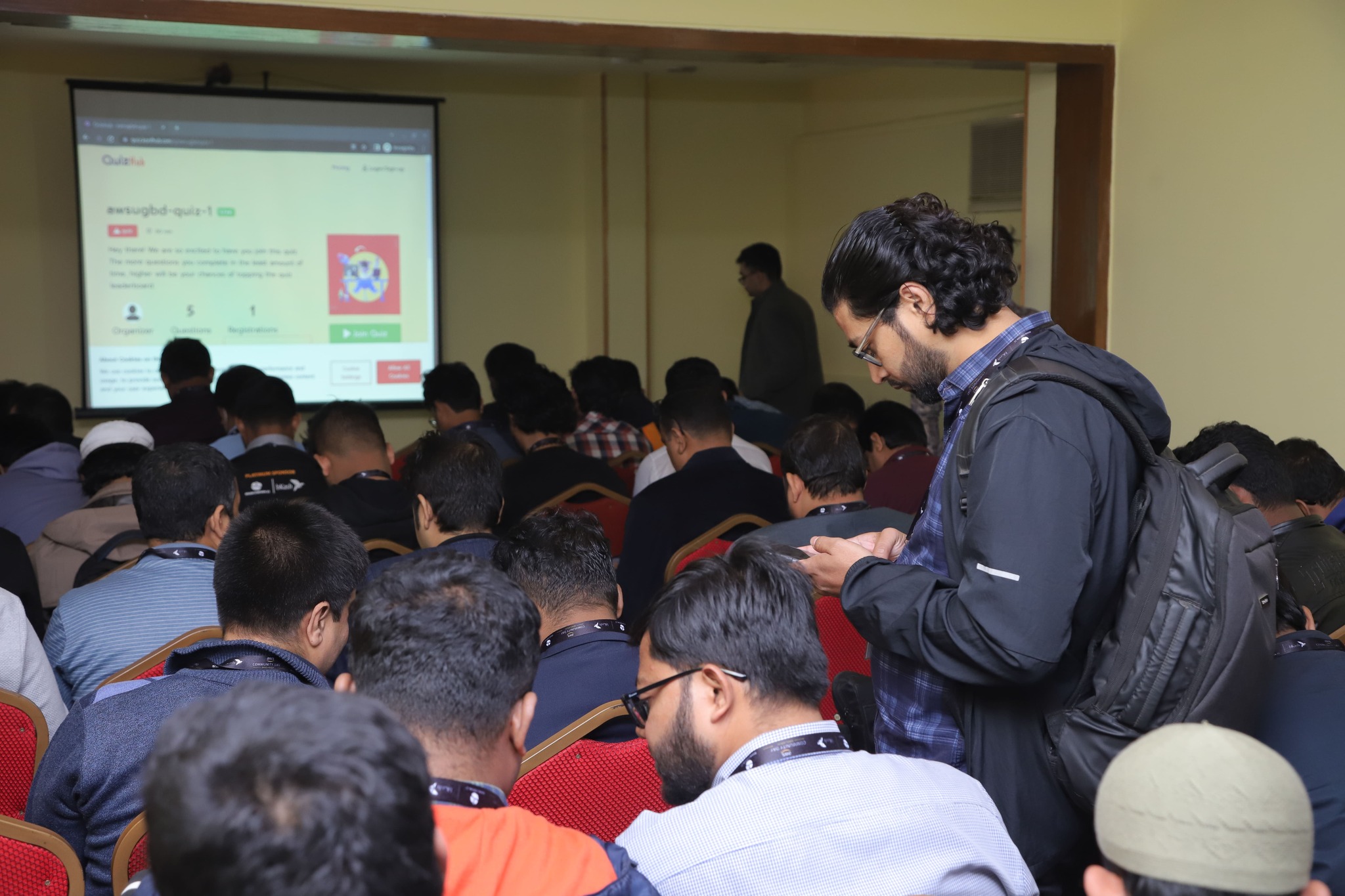
For the very first time, AWS Community Day Bangladesh happened in offline capacity on 17th December by AWS User Group Bangladesh where I am the co-founder of this community group. There has been number of sessions and activities having more than 500 people. I was session speaker as well with a topic “Possibilities of Hybrid Cloud for Enterprise”. I tried to share different aspect of hybrid cloud and how it can be leveraged for better outcome which are compliant to different regulatory authority.

I have shared few snaps of the session along with the presentation deck below:

AWS Community Day Bangladesh 2022

AWS Community Day Bangladesh 2022 (http://www.awsugbd.com/) took place on December 17th and brought together AWS enthusiasts, customers, and partners from Bangladesh and the surrounding region. The event was organized by the AWS User Group Bangladesh (I am the co-founder of this group) and featured a lineup of expert speakers and sessions focused on a variety of AWS-related topics.

Different speakers provided updates on the latest AWS products and services and shared insights on how organizations are using the cloud to drive innovation. Attendees also had the opportunity to participate in technical sessions led by AWS experts, as well as attend panel discussions and attendee-led sessions.

In addition to the technical content, AWS Community Day Bangladesh 2022 also featured networking opportunities. Attendees had the chance to connect with their peers and learn from one another’s experiences with AWS.

Overall, AWS Community Day Bangladesh 2022 was a great success, with attendees praising the high-quality content and engaging speakers. The event provided valuable insights and best practices for using AWS in the region, and attendees left with a wealth of new knowledge and connections. If you missed AWS Community Day Bangladesh 2022, be sure to mark your calendar for next year’s event.

Session on AWS Security Best Practices

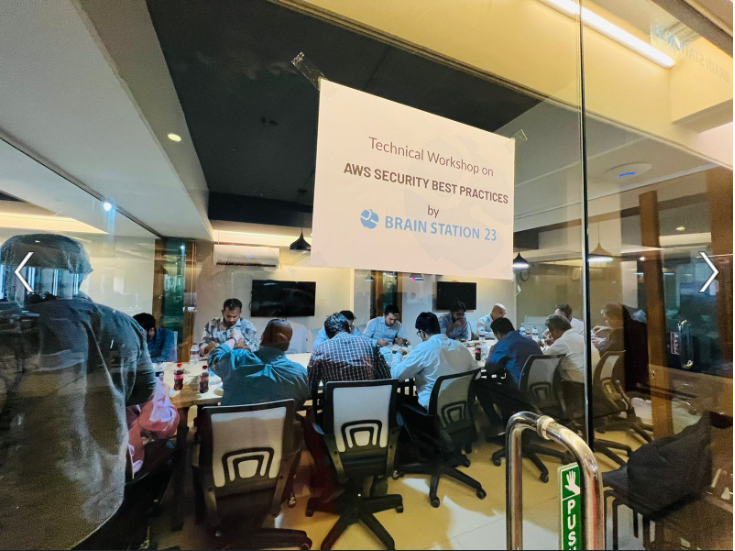
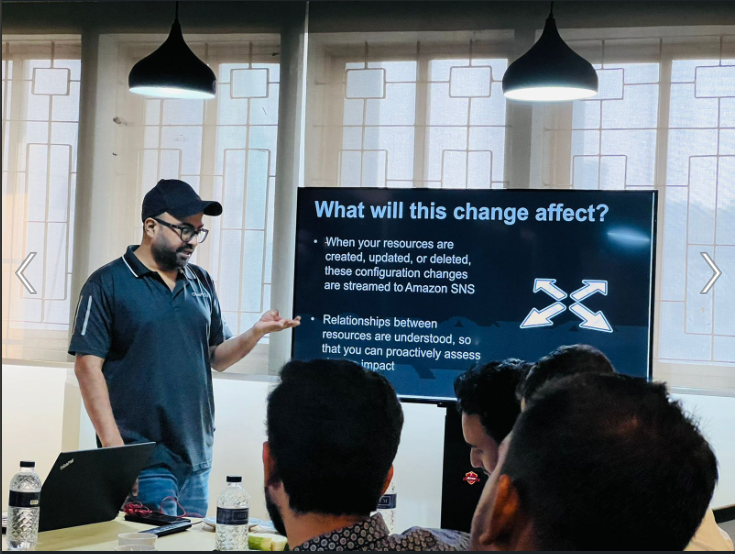
An in-house advanced technical session on AWS Security Best Practices was organized. Participants included clients from different industry vertices. Our experts highlighted realistic use cases during the workshop, along with a live demonstration of how security patches may prevent attacks, conserve resources, and reduce costs. We believe the workshop was highly beneficial for our attendees. As a speaker, it was also helpful to connect with them to understand different challenges and discuss about possible solutions.

I have shared the presentation deck below if it helps.

AWS Custom Policy for EC2 Restriction

For different purpose, it gets necessary to provide the EC2 access ton user or group. Providing AWS managed EC2 Full Access can be critical as if the credential is leaked or abused, there can have potential risk of huge bill end of the month. To avoid that, we can make a custom policy and mention the instance type you would like to permit. For instance, if you permit nano, micro, small and medium size of instance, you can define that. So that, the related users/group members won’t be able to launch EC2 other than the mentioned type,

Here are the steps:

Step 1: Go to IAM section of the AWS service

Step 2: Go to Policies

Step 3: Provide the following code in JSON with your preferred name of the policy

{
“Version”: “2012-10-17”,
“Statement”: [
{
“Effect”: “Allow”,
“Action”: “ec2:“, “Resource”: ““,
“Condition”: {
“ForAllValues:StringLike”: {
“ec2:InstanceType”: [
.micro”,
.nano”,
“*.small”,
“*.medium”

]
}
}
}
]
}

Step 4: Assign this policy to a role.

Step 5: Assign the role to a specific user/group to activate the policy

AWS COMMUNITY DAY BANGLADESH 2022

Big event is about to launch. AWS Community Day 2022 is going to happen on December 10, 2022. We are already in process of participants registration and speakers. As a community leader and co-founder of the largest AWS User group of Bangladesh, I am the core organizer of this event.

Here is the organizing team to make a successful execution of this event: