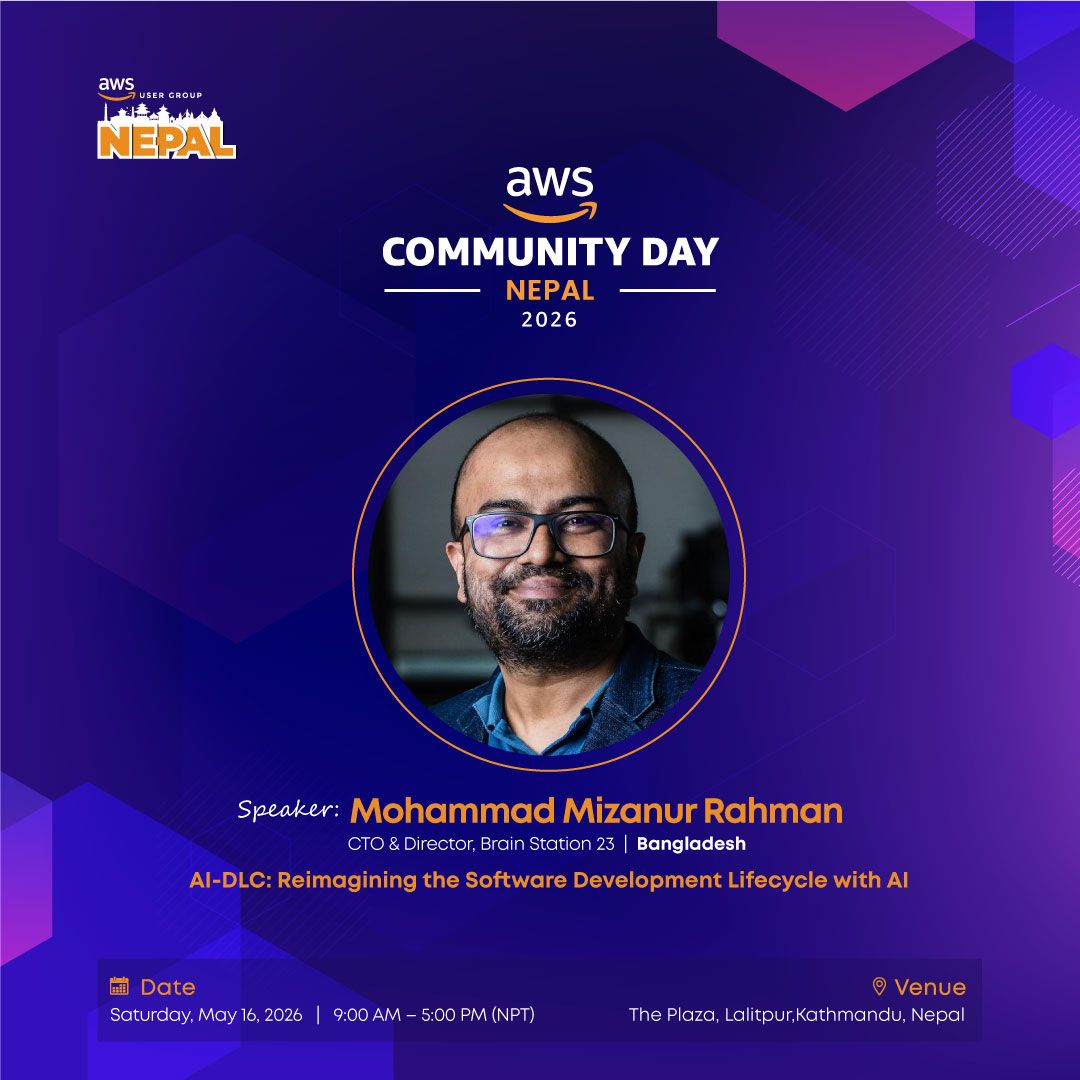
On 16 May 2026, I had the privilege of speaking at AWS Community Day Nepal 2026 on a topic that I believe will define the next major shift in software engineering: AI-DLC — Reimagining the Software Development Lifecycle with AI.
As an AWS Ambassador and someone deeply involved in software engineering, cloud adoption, and AI-first transformation, this session was especially meaningful to me. The goal was not just to talk about AI tools, but to discuss how AI can reshape the way we think, plan, build, validate, and operate software systems.
“AI-DLC is not about replacing developers. It is about replacing the repetitive, low-value parts of software development that were never the real point of engineering.”
AI-DLC positions AI as a central collaborator in the software development lifecycle, while humans continue to provide business context, validation, governance, and accountability.
Why AI-DLC Matters Now
Traditional SDLC and even many Agile practices were designed for a world where software delivery was fully human-driven. That world is changing rapidly.
Today, AI can help us generate plans, create artifacts, write code, prepare tests, summarize systems, and support operational workflows at a speed that was not possible before. But speed alone is not enough.
In the session, I highlighted some of the common challenges of traditional development approaches:
- Slow delivery cycles
- Context loss between phases and handoffs
- AI being used only for autocomplete instead of strategic collaboration
- Quality gaps caused by speed-versus-quality tradeoffs
This is where AI-DLC becomes important. It gives teams a structured way to use AI without losing control, quality, or governance.
From Vibe Coding to Governed AI-Driven Delivery
One of the important comparisons I shared was between three approaches to AI in development.
1. Vibe Coding
This is where developers freely prompt AI and iterate quickly. It is useful for fast prototyping, but it often lacks governance, traceability, and quality control.
2. Fully Automated AI
This approach imagines AI planning, coding, testing, and deploying end-to-end. While it promises maximum speed, it can introduce serious risks such as runaway behavior, low explainability, and poor alignment with business goals.
3. Human-in-the-Loop AI-DLC
This is the balanced approach. AI executes at high speed, but humans validate, guide, and approve at critical checkpoints.
For me, this is the most practical and responsible direction for real-world software teams.
“AI executes. Humans govern.”
That is the heart of AI-DLC.
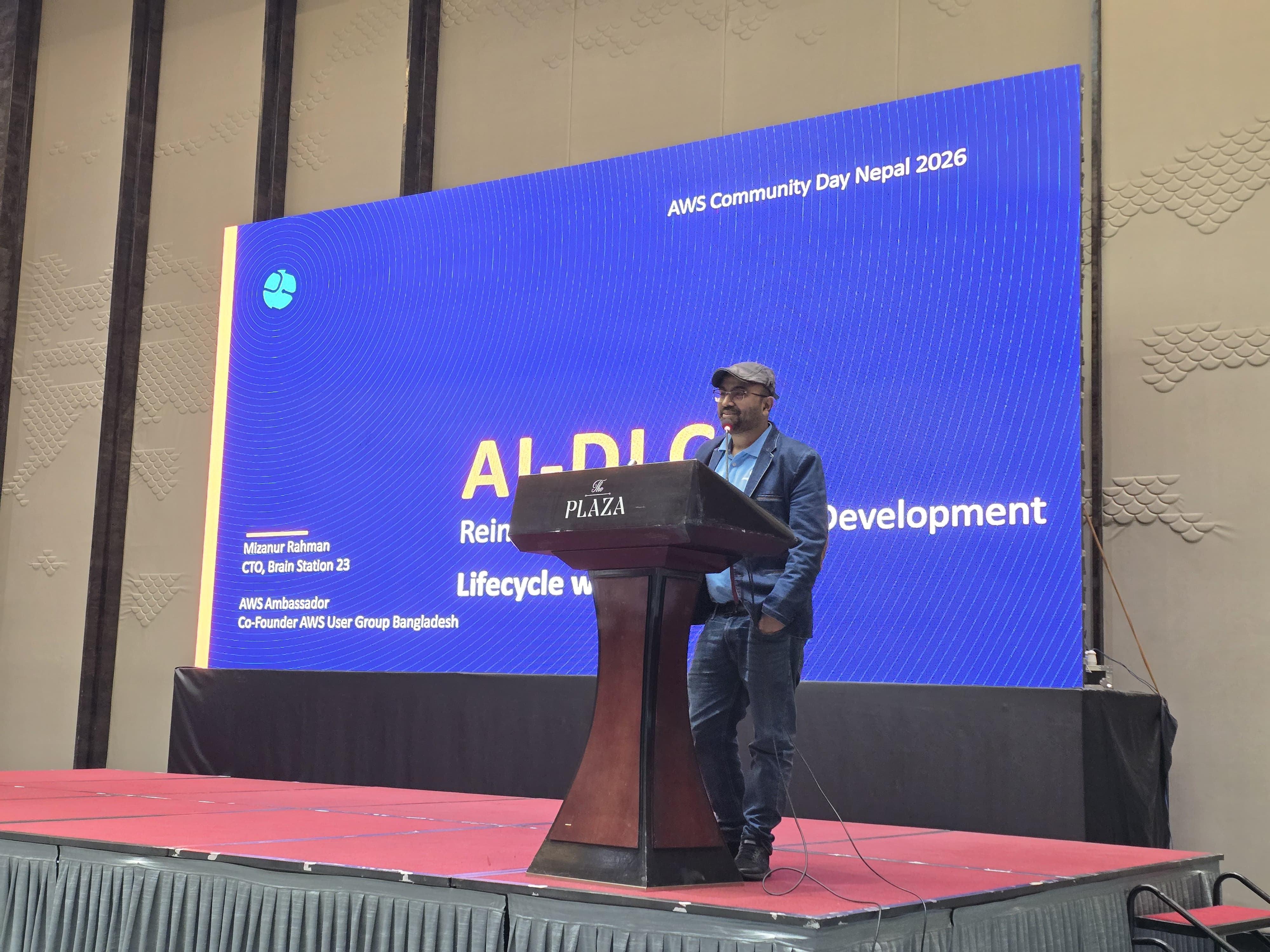
[Insert Image 2: Audience/session photo]
Caption: Discussing how human-in-the-loop AI can help teams move faster while maintaining engineering discipline.
What Is AI-DLC?
AI-DLC places AI at the center of the software development process — not merely as a coding assistant, but as a teammate that supports the entire lifecycle.
In the session, I explained AI-DLC through three key principles:
AI-Powered Execution
AI can create plans, generate artifacts, write code, produce test cases, and orchestrate workflows with significant speed.
Human Oversight
Humans validate assumptions, provide business context, review decisions, and approve progress at key gates.
Dynamic Collaboration
Instead of isolated handoffs, teams work with AI in collaborative rituals to clarify, build, validate, and improve continuously.
The key distinction is that AI-DLC is not a one-shot pipeline. It is a continuous loop.
The Continuous AI-DLC Loop
A major part of the session focused on the continuous loop of AI-DLC:
Plan → Clarify → Execute → Validate
AI creates a plan from the available context. It asks clarifying questions when the context is incomplete. It executes by generating code, tests, and supporting artifacts. Then developers, architects, product owners, or domain experts validate the output.
This cycle continues repeatedly.
Each loop improves the quality of context. Better context leads to better AI output. Better output leads to faster validation. Faster validation leads to faster delivery.
In AI-DLC, context becomes one of the most valuable engineering assets.
Bolts, Not Sprints
One of the concepts I emphasized was the shift from traditional sprints to bolts.
In traditional Agile, teams often work in two-to-six-week sprint cycles. In AI-DLC, many units of work can move in much shorter cycles — sometimes hours or days — because AI accelerates planning, implementation, testing, and documentation.
This does not mean skipping discipline. Rather, it means using AI to reduce unnecessary waiting time, reduce repetitive work, and move faster with stronger validation.
In the session, I shared how AI-DLC reimagines traditional delivery vocabulary:
- Sprints become Bolts
- Epics become Units of Work
- Stories become Intent
- Sprint planning and backlog refinement become Mob Elaboration
- Retrospectives become continuous feedback inside collaboration sessions
This shift is not just terminology. It reflects a new operating model for AI-assisted engineering.
Greenfield Projects: Spec Quality Drives AI Quality
For greenfield projects, I shared a structured inception flow:
Discovery → Definition → Design → Build → Ship
Before writing code, the team should prepare a strong AI-ready specification. This includes:
- Project brief
- Product Requirements Document
- Core user journeys
- Feature prioritization
- Success metrics
- Branding guidelines
- Design system
- Wireframes and user-flow diagrams
- Solution architecture
- Database design
- API design
- Frontend specification
- Testing strategy
- Observability plan
“Spec quality equals AI output quality. Under-specified input leads to under-delivered output.”
This is especially important for AI-first development. The better the context we provide, the better the AI can support us.
[Insert Image 3: Photo showing slide/demo/code screen]
Caption: Demonstrating how structured specifications can guide AI-assisted development more effectively.
Brownfield Projects: Lock Current Behavior Before Changing It
For brownfield or legacy systems, I shared a different approach.
AI can be powerful in legacy modernization, but it can also be risky if used without safeguards. Before asking AI to change legacy code, teams must first understand and protect existing behavior.
The brownfield flow I presented was:
Understand → Safeguard → Plan Change → Build → Ship
“Lock the current behavior before you change it.”
That means teams should first use AI to read and summarize the codebase, reverse-engineer specifications, map dependencies, document current architecture, and audit test coverage.
Then they should add regression or characterization tests before making changes.
Without this safety net, AI-generated changes can silently break existing behavior.
This is where responsible AI adoption becomes critical. AI should accelerate modernization, but not at the cost of stability, security, or business continuity.
Human Validation Is the Core of AI-DLC
A recurring theme in my session was human validation.
AI-DLC does not remove the need for engineering judgment. In fact, it makes judgment even more important.
Humans are needed to validate:
- Business intent
- Requirement completeness
- Architecture decisions
- Security implications
- Data privacy risks
- Testing coverage
- Operational readiness
- User experience
- Production readiness
AI can generate. AI can suggest. AI can accelerate. But humans must remain accountable.
That is why I believe the future of software engineering is not “AI instead of developers.” It is AI-augmented teams with stronger engineering discipline.
Key Takeaways from the Session
1. AI Adoption Compounds
The productivity gap between AI-enabled teams and traditional teams will continue to grow. Organizations need a clear method to harness AI effectively.
2. AI-DLC Means Human-in-the-Loop
AI should execute, but humans should govern. This is the safest and most practical path for real-world software delivery.
3. Bolts Replace Sprints
AI allows iteration cycles to move from weeks to hours or days, but only when supported by proper context and validation.
4. Context Is Everything
The quality of AI output depends heavily on the quality of context, including specifications, architecture, rules, memory, and validation criteria.
5. Use the Right Tools
Rule files, skills, MCP, subagents, AI IDEs, and workflow frameworks all serve different purposes. Teams need to understand when and how to use them.
Why This Matters for Brain Station 23
At Brain Station 23, we are actively working toward becoming an AI-first software services organization. For us, AI-DLC is not just a presentation topic. It is part of a broader transformation in how we design, build, modernize, and operate software systems for clients.
We see strong potential for AI-DLC in areas such as:
- Legacy modernization
- Cloud-native application development
- AI-assisted QA and test automation
- Secure software delivery
- Product prototyping
- Internal engineering productivity
- Managed services and continuous improvement
As software delivery models evolve, companies that can combine AI speed, engineering discipline, cloud-native architecture, and human governance will have a major advantage.
Gratitude to AWS Community Day Nepal
I am grateful to the organizers of AWS Community Day Nepal 2026 for creating such a meaningful platform for the cloud and developer community.
Community events like this are powerful because they bring together builders, practitioners, leaders, and learners. They create space for practical knowledge sharing, honest discussion, and regional collaboration.
As an AWS Ambassador, I always find it inspiring to contribute to these community-led initiatives and learn from fellow builders across countries.
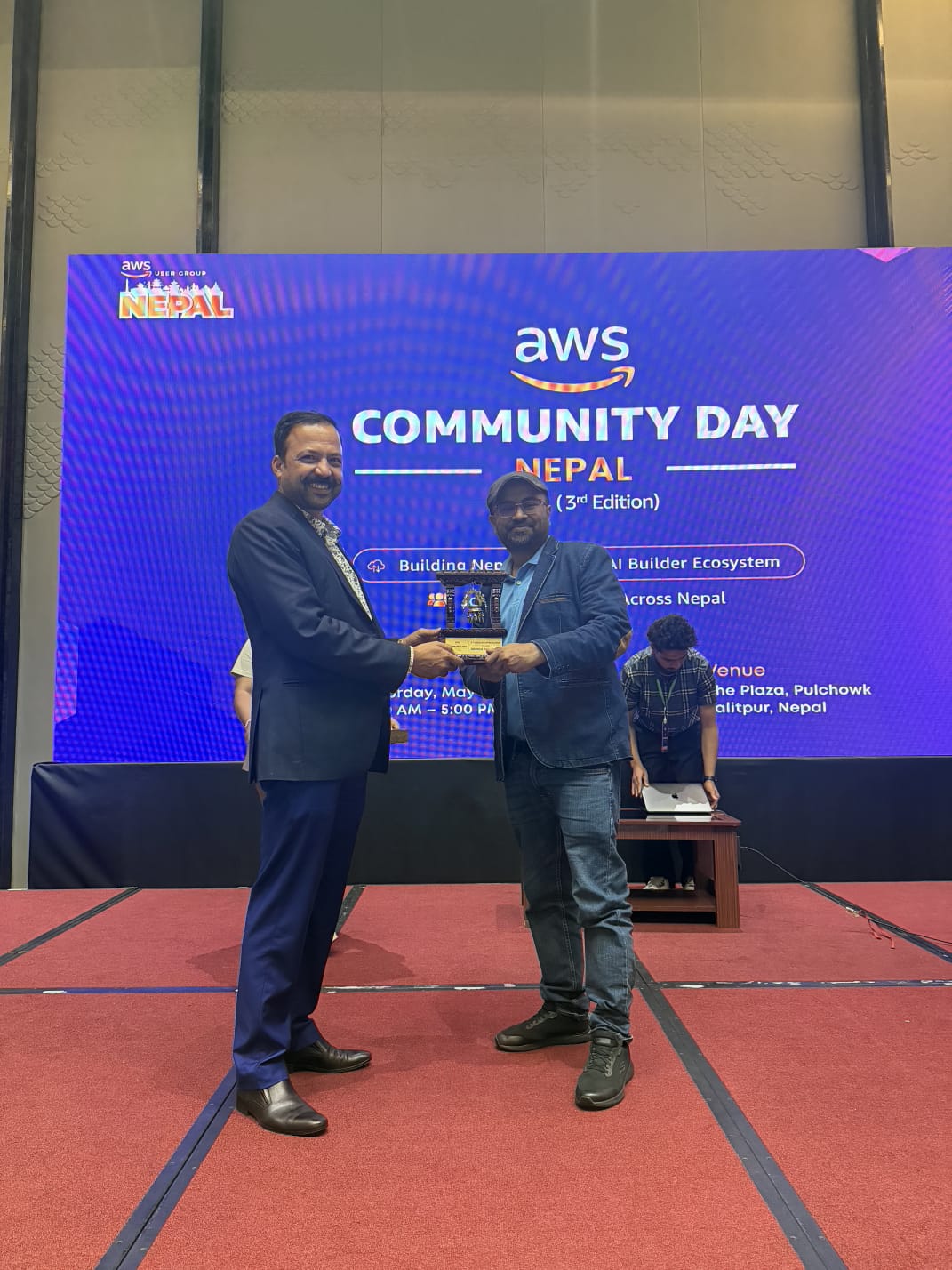
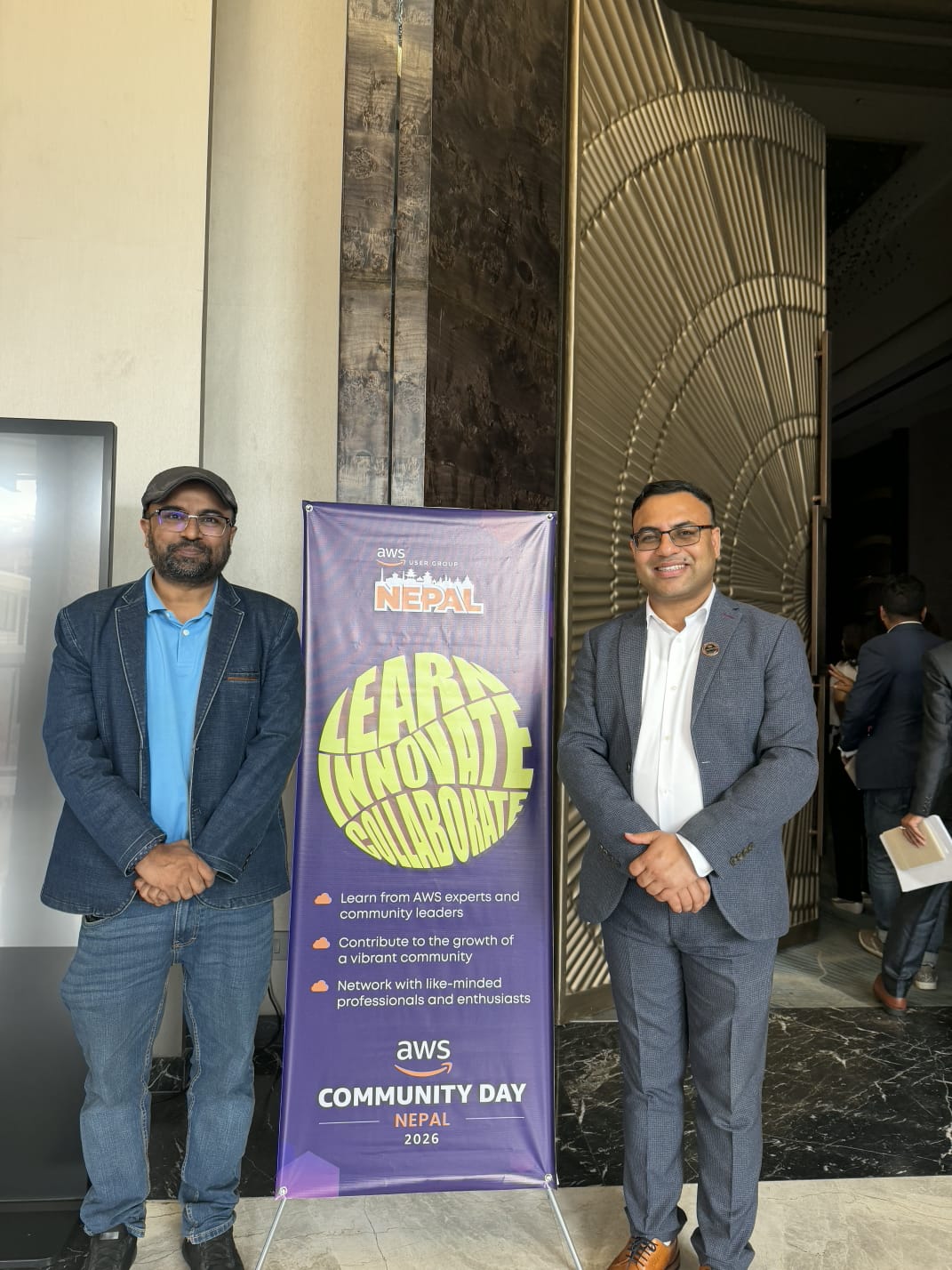
[Insert Image 4: Group photo or organizer photo]
Caption: Grateful to the AWS Community Day Nepal 2026 organizers and community for the opportunity to share and learn together.
Closing Thought
AI-DLC is still evolving, but one thing is clear: software development will not remain the same.
The teams that succeed will not be the ones that simply use AI tools randomly. The successful teams will be the ones that create a structured, governed, and context-rich development lifecycle around AI.
AI-DLC gives us a practical direction for that future.
It helps us move faster, but not blindly.
It helps us automate, but not without accountability.
It helps us modernize, but with safeguards.
It helps us reimagine software delivery while keeping humans at the center of judgment and responsibility.
“AI-DLC is not replacing developers. It is replacing the parts of the job that were never the point.”

